Quick answer
The operating answer
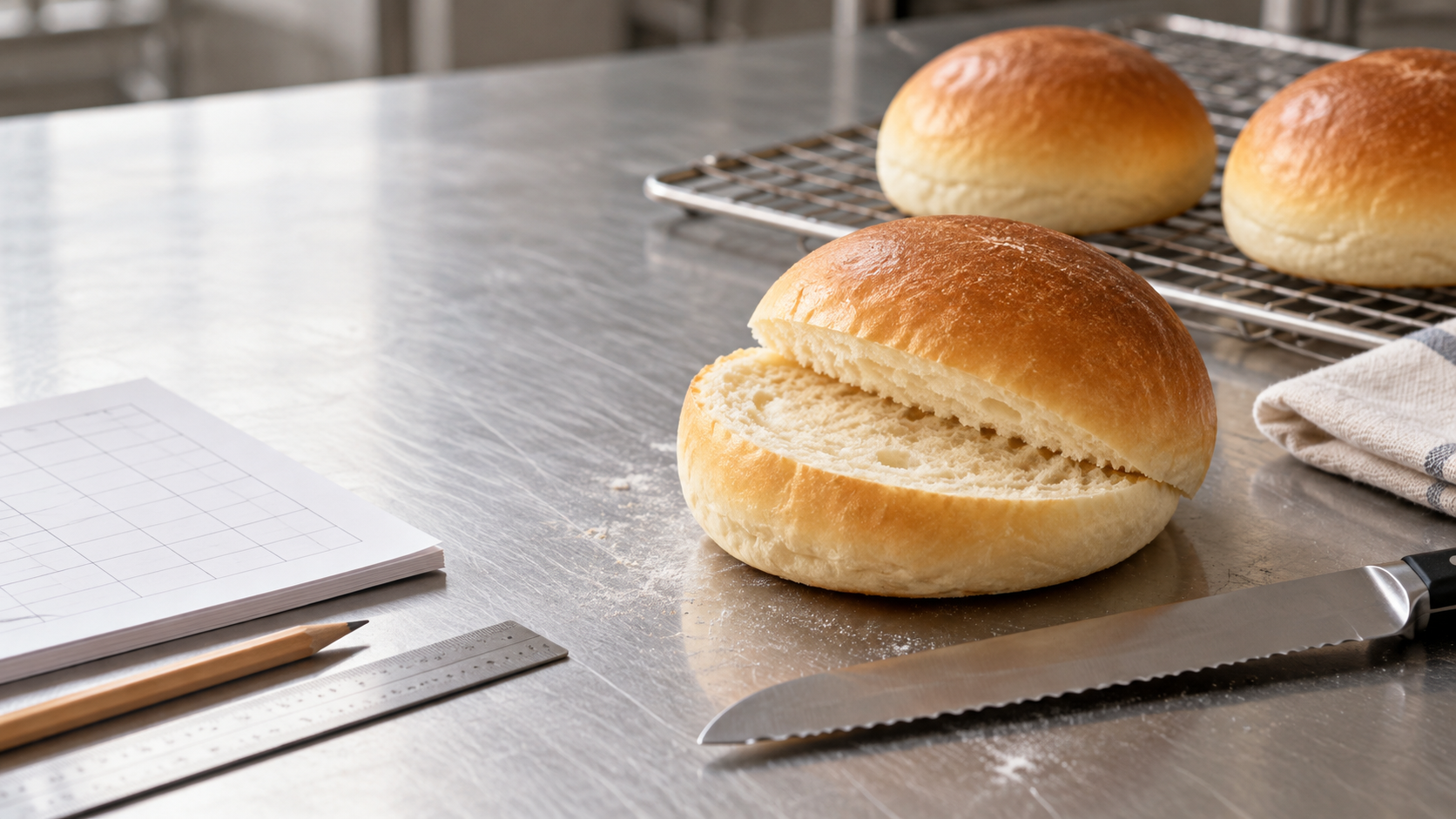
Cut a Milk Cream Bun only when a representative cooled bun can open to the intended filling path without tearing, compressing, or shedding an unacceptable amount of crumb. Define the approved cut direction, depth, tool, bun support, and finished opening; compare samples from the actual bake and cooling route; then inspect the cut again after the normal cream deposit, package, and handoff interval. A clean-looking opening at the bench is not enough if the bun collapses, pushes cream out, or reaches the customer as a different product. Keep the cutting decision separate from the bakery's food-safety, shelf-life, and legal-sale controls.
- Cutting is a product-control step: it sets the path and support for the cream deposit, rather than merely making a bun look ready.
- Use a cooled, representative bun and a defined tool, orientation, depth, and support method; do not judge the first easy-to-cut bun as the batch standard.
- Check the complete route after filling, packaging, and the ordinary handoff interval, because a cut that looks clean empty can fail once the bun carries cream.
- When the opening tears, first distinguish temperature and cooling history from blade condition, bun support, cut route, and deposit pressure before changing more than one variable.
- A quality gate for the cut does not establish safe cold holding, shelf life, allergen communication, labelling, or legal sale approval.
The cut is part of the filling system
A Milk Cream Bun is not ready for cream simply because it feels soft. The cut determines how the crumb carries the deposit, how evenly the bun opens, and whether the finished piece can retain its intended shape through packaging and handoff. If one operator opens a shallow pocket and another nearly halves the bun, they have made two different products before the piping bag arrives.
The American Society of Baking describes bread evaluation as comparison against a bakery-defined standard and notes that a warm crumb can tear or collapse during slicing. That does not create a universal cutting temperature or knife choice for a filled bun. It does support a useful operating rule: judge a representative bun only after it has reached your defined cooling condition, and score the internal result against a visible local reference rather than a memory of an easy sample.
| Control point | Define it locally | Why it belongs in the record |
|---|---|---|
| Bun version | Formula version, piece size, bake and cooling route | A different bun structure can change how the same cut behaves |
| Cut route | Orientation, entry point, intended depth and remaining hinge | Makes the opening repeatable without guessing from appearance |
| Tool and support | Clean sharp tool, bun position and how it is held | Separates a damaged crumb from a genuinely weak bun |
| Finished check | Opening, crumb compression, cream containment, shape and package condition at handoff | Prevents approval of an empty-bun result that fails as a product |
Set one fill-ready cutting reference before training the shift
Start with the approved bun and ordinary cooling route. Select samples from meaningful positions in the bake or cooling run, not only the bun that looks most even. Use the same clean cutting tool and bun support for each comparison. Open the bun on the planned line, then look for a continuous hinge, an accessible filling path, an intact outer wall, and a crumb that remains supported rather than compressed into a paste or torn into loose pieces.
Write the reference in observable language. For example: where the blade enters, which way it travels, what portion remains connected, and what the open bun should look like before filling. Avoid treating an arbitrary depth or a single knife motion as a universal specification. The correct endpoint depends on the locally commissioned bun, the intended deposit, package clearance, and customer route.
- Bring representative buns to the bakery's defined quality-cooling endpoint before cutting.
- Record the bun version, batch position, cooling route, tool, cut orientation, and the intended opening reference.
- Open samples using the same support and cut route; do not add cream yet if the empty bun already tears, collapses, or sheds excessive crumb.
- Fill acceptable samples with the normal cream batch and normal deposit method, then put them through the usual package and handoff interval.
- Compare the finished buns with the written reference and record release, hold, or one focused next trial.
- Retest when a material, bake, cooling, tool, deposit, package, or customer route changes materially.
Diagnose the first changed condition instead of cutting deeper
A torn opening does not automatically mean the operator needs a deeper cut or more cream. If the crumb drags or the bun compresses, compare the cooling condition and actual bun structure with the reference before changing the knife or deposit. If the opening is clean but cream escapes after filling, keep the cut route fixed and inspect the deposit, bun support, package clearance, and handoff separately. Changing cut depth, cream condition, deposit weight, package, and cooling time together removes the evidence needed to identify the cause.
ASB's slicing guidance identifies blade condition, product temperature, and product-specific set-up as practical sources of poor cut quality in commercial bread. A handheld filled-bun station is not an industrial slicer, so do not borrow its equipment settings. The transferable discipline is to keep the tool clean and sharp, make the product condition explicit, and maintain a product-specific reference rather than assuming one setting travels across every bread.
| Observed result | First useful check | Hold constant for the next trial |
|---|---|---|
| Crumb tears or drags at the blade | Did the sample reach the same cooling condition and use a clean, sharp cutting tool? | Cut orientation, intended opening and cream deposit |
| Bun flattens while it is opened | Was the bun supported at the same point and did its bake or cooling route change? | Tool, deposit and package |
| Opening looks clean but cream is pushed out | Does the approved deposit fit the defined opening and package clearance? | Cut route and bun version |
| Only late-run buns cut poorly | What changed first across the bake, unloading or cooling sequence? | Reference cut and filling method |
| Extra crumb appears in the package | At which cut, fill, package or handoff step does the loss first appear? | The current product standard while one route is checked |
Use a short cutting-gate record the team can repeat
The aim is not a decorative knife log. A short record lets the owner-chef show a new operator what an acceptable opening is, compare an early and late bun fairly, and choose the next action without inventing a different route during service. Keep the record beside the current bun and filling standard so a packaging or cream change does not silently inherit an old cut approval.
For a Korean bakery, this protects both product quality and sellable yield. A bun can be technically fillable yet still be the wrong customer product if its sidewall tears, its cream is displaced, or its package looks untidy at handoff. Release only the route that repeats at the finished endpoint. If it does not, hold the affected trial, identify the first meaningful difference, and change one condition before the next comparison.
| Record field | What to enter | Decision it supports |
|---|---|---|
| Reference | Bun version, batch point, cooling endpoint and approved opening description | A clear comparison target |
| Cut setup | Tool condition, support, orientation, entry point and intended hinge | A teachable, repeatable cutting route |
| Customer-stage check | Crumb condition, opening, cream containment, shape, package and handoff notes | Release, hold or a focused retest |
| Next action | Keep, stop, or one specified variable to change and its owner | A practical improvement rather than an unsupported fix |
Keep the quality gate inside the food-safety and information system
This cutting record answers a quality question: whether the bun can become the intended filled product through the route you observed. It does not set a dairy filling's safe holding time, date mark, shelf life, allergen statement, label, or sale permission. Those controls require the locally applicable rules and the bakery's product-specific food-safety program.
The FDA Food Code is a United States model, not a rulebook automatically binding in another jurisdiction. Its cold-holding and date-marking provisions demonstrate why an attractive finished bun cannot substitute for a documented food-safety decision. Keep the visual and structural cut check connected to, but distinct from, the controls that govern the dairy component in the place where you operate.
Use the cutting gate with these Milk Cream Bun controls
- Milk Cream Bun Cooling Gate: Release a Soft Bun That Is Ready to Fill
Use this first when the cut itself suggests that the bun has not reached a stable, fill-ready condition.
- Milk Cream Bun Cream Batch Release: Whip, Hold, and Deposit a Filling That Still Looks Right at Handoff
Use this when the opening holds but the finished product loses its intended cream shape or contrast.
- Milk Cream Bun Packaging: Protect the Soft Bun, Cold Cream, and Sellable Finish
Use this when the cut and deposit pass at the bench but the customer-stage package condition changes.
Frequently asked questions
Questions operators ask
Should I cut every Milk Cream Bun to the same depth?
Use one defined finished opening for the locally commissioned bun, not a universal depth copied from another size or formula. The approved result must retain the required hinge and support, accept the normal deposit, and remain presentable through the actual package and handoff route.
Can I cut the buns while they are still warm to speed up service?
Do not assume speed is an approval. A warm crumb may tear or collapse during cutting, and a quality check does not override your product-specific cooling or food-safety program. Compare only buns at the defined local endpoint and make any service change a controlled trial.
If the cream leaks, should I make a deeper opening?
Not before locating the first change. Keep the cut route fixed and compare the cream condition, deposit, bun support, package clearance, and handoff. A deeper opening can hide a deposit or package problem while weakening the bun.
Does this record establish safe cold holding or shelf life?
No. It is a quality record for the cut and finished appearance. Cold holding, date marking, allergen communication, labelling, shelf life, and legal sale depend on the applicable local requirements and your written product-specific program.
Technical references
Sources used for this field note
Related field notes

Why learn from MasterBaker
First-hand bakery work, translated into measurable decisions
MasterBaker.io is led by Joonho Jang (장준호), a Le Cordon Bleu-trained owner-chef who develops, produces, and sells bakery products in Korea. The flagship salt bread grew from a product sold and locally praised in Joonho Jang's bakery. These field notes turn that operating experience into temperatures, weights, endpoints, QC, costing, and release decisions rather than anonymous recipe summaries. Read Joonho Jang's method and evidence policy.