Quick answer
The operating answer
A milk cream bun usually collapses or leaks because the bun, cream, filling operation, and holding conditions were approved separately instead of as one system. The bread must be fully baked and cooled enough to set its crumb, the dairy cream must reach a repeatable whipping endpoint at a controlled temperature, the deposit must fit the bun's real internal capacity, and the filled product must remain inside a locally validated cold chain and service window.
- Cool and set the bun before filling; a warm, fragile crumb cannot support a clean cavity or a stable cream deposit.
- Treat cream temperature and whipping endpoint as production specifications, not visual guesses.
- Standardize cavity geometry and fill weight before changing the cream formula.
- Measure product temperature and elapsed time during filling and service, not only the refrigerator display.
- Validate quality life and food-safety controls separately under the actual package and sales conditions.
The product is bread, aerated dairy, and time
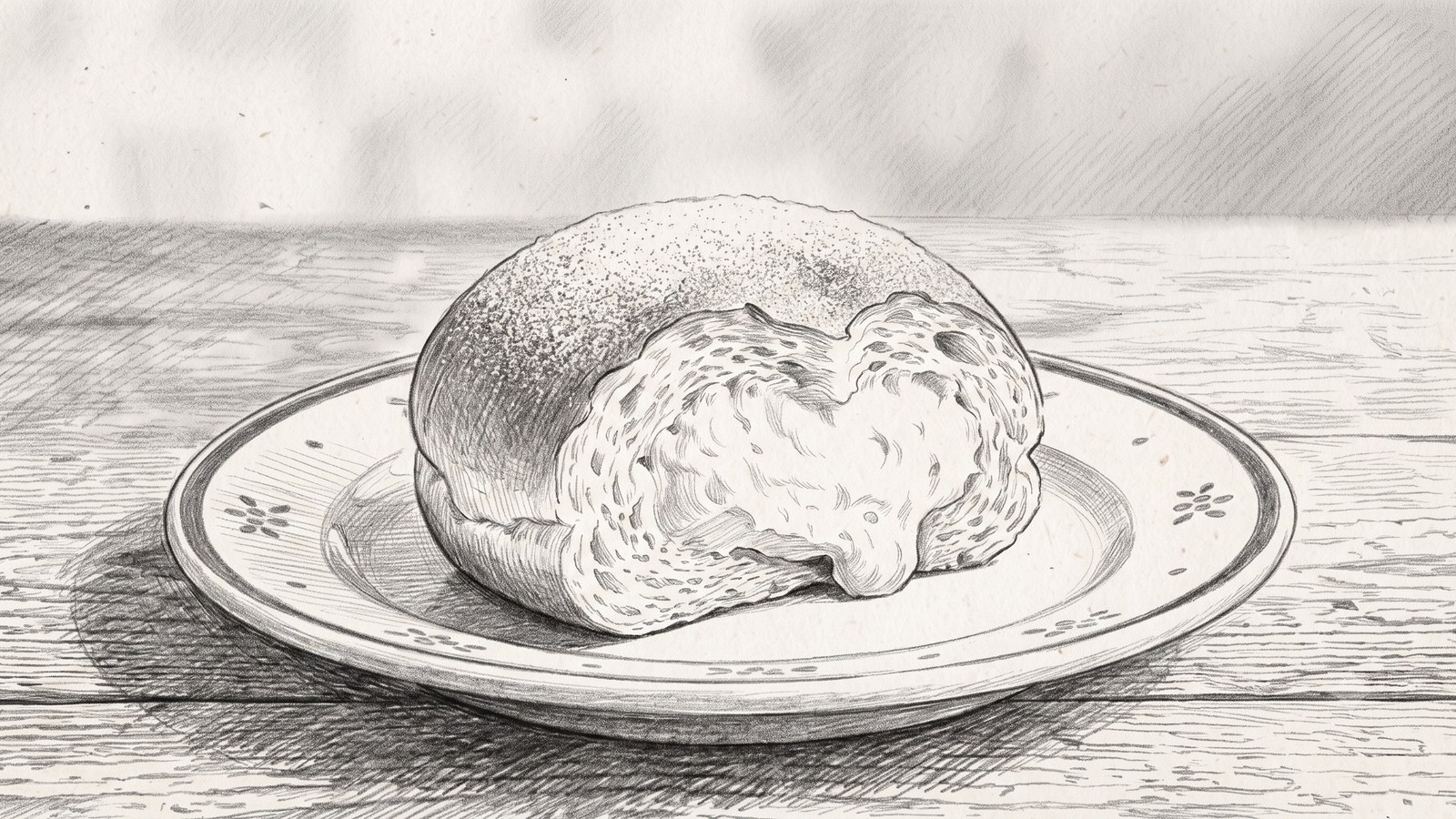
A milk cream bun looks simple because the customer sees only a soft roll and a generous cream center. Commercially, it is a coupled system. The bun supplies the shell and eating texture, the whipped cream supplies an air-filled fat network, and every minute between whipping, filling, refrigeration, display, delivery, and eating changes both components.
Do not diagnose a leaking bun by changing the cream first. A warm or under-set bun can compress around the piping nozzle, tear internally, or release residual heat into the filling. An overwhipped cream can look firm in the bowl but become coarse and weak during piping. An excessive deposit can force even a correctly made cream through the entry point. Start by locating the stage where control was lost.
Set the bun before the cream enters
Bread cooling is part of structure formation. The American Society of Baking describes cooling as heat and moisture transfer and notes that starch setting during cooling helps the crumb hold its shape. Insufficiently cooled bread remains soft and carries more internal heat and moisture into the filling operation. It may deform under handling even when its crust color looks finished.
Create a filling-release standard for the bun. Record baked weight, center or representative product temperature, elapsed cooling time, surface condition, and whether the crumb recovers after gentle compression. The correct target belongs to the specific bun size, bake profile, room conditions, and cooling setup. Do not use appearance or a universal minute count alone.
| Bun condition | What can happen during filling | First controlled check |
|---|---|---|
| Warm and very soft | Residual heat weakens cream and the crumb closes around the nozzle | Product temperature and cooling airflow |
| Underbaked or gummy center | The cavity tears, compresses, or releases moisture into the fill zone | Bake profile, finished weight, and internal structure |
| Overcooled and exposed | Dry crust or firm crumb makes a rough entry and poorer eating contrast | Cooling time, room humidity, and exposure |
| Approved and resilient | The bun accepts a clean cavity and returns around the deposit | Preserve as the photo and measurement reference |
Whipped cream is a controlled foam, not simply a thicker liquid
Whipping introduces air while partially coalesced fat globules help build a network around the bubbles. The balance matters. Too little development gives low body and drainage; too much mechanical work can drive the system toward coarse aggregation, graininess, butter formation, and eventual collapse. The visible peak is useful, but it is not enough for production control.
The Dairy Processing Handbook explains that whipping performance depends on the balance of liquid and crystallized milk fat and that warm cream does not build the intended foam structure. A published Journal of Dairy Science study also found that whipping temperature changed whipping time, overrun, bubble size, fat aggregation, and rheology across the tested range. This does not create one universal temperature for every formula. It confirms that temperature must be locked and recorded for the specific cream system.
Define the endpoint with numbers and behavior
A production endpoint should survive transfer from bowl to piping bag and from piping bag to bun. Record starting cream temperature, batch size, mixer and attachment, speed sequence, elapsed time, finished mass, and a simple deposit test. The deposit should hold the intended shape without visible drainage, graininess, or immediate slumping under the actual room conditions.
Avoid using mixer time as the only endpoint. A smaller batch, warmer bowl, different cream lot, slower operator, or delayed piping step can change the result. Time is a useful record after the physical endpoint has been defined.
| Cream symptom | Likely signal | First controlled response |
|---|---|---|
| Flows back immediately after piping | Insufficient structure, warm system, or formulation mismatch | Check ingredient, bowl, and finished cream temperature before extending the mix |
| Looks firm but drains later | Foam stability or holding condition is not commissioned | Run a timed deposit test under the real cold chain |
| Grainy with a buttery mouthfeel | Excessive fat aggregation or overwhipping | Stop earlier and verify temperature and mixer energy |
| Stable in bowl but weak after piping | Bag handling, warm hands, delay, or excessive shear | Measure transfer time, working quantity, and cream temperature at deposit |
| Good texture but leaks from bun | Deposit exceeds cavity capacity or entry does not close | Check bun weight, cavity geometry, nozzle depth, and fill mass |
Standardize the cavity and fill weight
Generosity must be measurable. A target fill weight controls appearance, flavor balance, food cost, package cleanliness, and the pressure placed on the bun. If the product is approved only by how full it looks, operators will make larger deposits to be safe and the most attractive unit may become the least stable one.
Weigh several cooled buns before and after filling. Record average fill and range, but also inspect where the cream sits. Standardize nozzle, entry point, depth, deposit direction, and the remaining closure around the entry. A bun with an off-center cavity can leak even when its fill weight is correct.
| Control | Measurement | Commercial effect |
|---|---|---|
| Bun | Cooled weight, dimensions, and resilience | Defines the shell and local fill capacity |
| Cavity | Entry point, nozzle depth, and direction | Controls distribution and visible leakage |
| Deposit | Filled minus unfilled weight | Controls consistency, cost, and eating balance |
| Closure | Entry appearance after deposit and handling | Reduces escape during packing and transport |
| Service test | Appearance and texture at handoff and end of window | Proves the customer receives the approved product |
Protect the cold chain without confusing it with shelf life
A dairy-filled bun may require time-temperature control under the rules that apply where it is produced and sold. The FDA Food Code is a U.S. model code and uses 5 C / 41 F or below for cold holding of applicable time/temperature control for safety food. Local adoption and product classification can differ, so use the competent authority and a product-specific food-safety plan for the actual market.
Measure the product or cream at defined checkpoints rather than trusting the refrigerator setpoint. A large piping bag, crowded preparation bench, repeated door opening, delivery route, or warm display can create a different exposure than the equipment display suggests. Work in controlled quantities, keep clean bulk separate from the active filling station, and define what happens to material that exceeds the approved working condition.
Cold holding does not prove a shelf life. Safety, cream stability, bun staling, moisture migration, package condensation, flavor, and microbial growth are different questions. Approve a sale window only after the finished product has been tested in its real package, temperature, handling, and delivery conditions.
Run a commissioning test that identifies the real cause
This method separates three problems that are often called the same thing: a weak bun, an unstable cream, and an overfilled or poorly handled product. Each needs a different correction.
- Bake one approved bun lot and record bake profile, finished weight, cooling conditions, and filling-release temperature.
- Prepare one cream lot with recorded ingredient temperature, batch size, mixer program, endpoint, and finished temperature.
- Fill representative buns with the same nozzle, cavity method, and target deposit; record the actual fill range.
- Hold the products in the exact package and cold-chain path intended for sale.
- Score bun deformation, cream drainage, graininess, leakage, package soil, and eating texture at filling, handoff, and the proposed end of service.
- Change one primary variable for the next trial, such as bun filling temperature, cream endpoint, or fill weight, while keeping the others fixed.
- Lock the local standard only after it repeats under a normal production load and normal staff handling.
The commercial decision
A milk cream bun is ready for sale when the generous appearance survives the real workflow without hidden waste, package leakage, or an unsafe holding assumption. The best specification is not the maximum cream deposit. It is the deposit that creates the intended bite, repeats across staff, and reaches the customer inside the approved quality and safety window.
The MasterBaker Milk Cream Bun Formula Collection connects the founder-developed tangzhong bun, dairy cream, six menu applications, scaling, fill controls, cold-chain prompts, QC, costing, packaging, and commissioning records. It is designed to install the complete menu system rather than leave the bakery to diagnose a recipe in isolation.
Frequently asked questions
Questions operators ask
Why does milk cream look stable in the bowl but leak after filling?
The piping step can add heat and shear, while a warm bun, long bench delay, excessive fill, or weak cavity can create leakage that was not visible in the bowl. Record the cream temperature and behavior at deposit, not only at mixer stop.
Should milk cream be whipped as firm as possible?
No. Excessive whipping can create graininess and push the fat network toward breakdown. Define the minimum endpoint that pipes cleanly and remains stable through the actual holding and service test.
Can I fill milk cream buns while they are still slightly warm?
Do not rely on the word slightly. Establish a measured filling-release condition for the bun and verify that the cream, crumb, and food-safety plan remain within specification. Residual heat can weaken both bun structure and cream stability.
How much cream should go into one bun?
There is no universal mass. Set the deposit from bun size, cavity capacity, intended eating balance, food cost, package performance, and the validated service result. Then control it by weighing filled minus unfilled buns.
Does refrigeration guarantee that a filled bun is safe for several days?
No. A refrigerator setting does not establish product temperature, contamination control, or shelf life. Follow local requirements and validate the finished product, process, package, and holding period with an appropriate food-safety plan.
Technical references
Sources used for this field note
Related field notes

Why learn from MasterBaker
First-hand bakery work, translated into measurable decisions
MasterBaker.io is led by Joonho Jang (장준호), a Le Cordon Bleu-trained owner-chef who develops, produces, and sells bakery products in Korea. The flagship salt bread grew from a product sold and locally praised in Joonho Jang's bakery. These field notes turn that operating experience into temperatures, weights, endpoints, QC, costing, and release decisions rather than anonymous recipe summaries. Read Joonho Jang's method and evidence policy.