Quick answer
The operating answer
Release a Milk Cream Bun only after the bun, cream, deposit, and handoff route meet one locally approved standard. The filling station is not simply where cream is added: it is where a baked bun becomes a cold, customer-ready product. Define the approved bun opening and support, prepare and hold cream under your food-safety program, use a repeatable deposit and finish, then inspect the filled bun after its real package and service route. If the result drifts, change one controllable factor and test the finished product rather than adding more cream or blaming the package.
- Treat filling as a release stage: the sellable unit is the filled, cold, handed-off bun—not an empty bun or a beautiful piping sample.
- Build one reference that describes bun support, cream appearance, deposit placement, clean edges, package condition, and the intended first bite.
- Use a measured deposit and a repeatable piping route; a taller swirl is not automatically a more valuable product.
- Keep cream-containing products within the bakery's written food-safety and temperature-control program; a quality standard does not establish a sale window.
- Score representative early, middle, and late buns from the actual filling run before increasing pace or batch size.
Filling is where the product promise becomes real
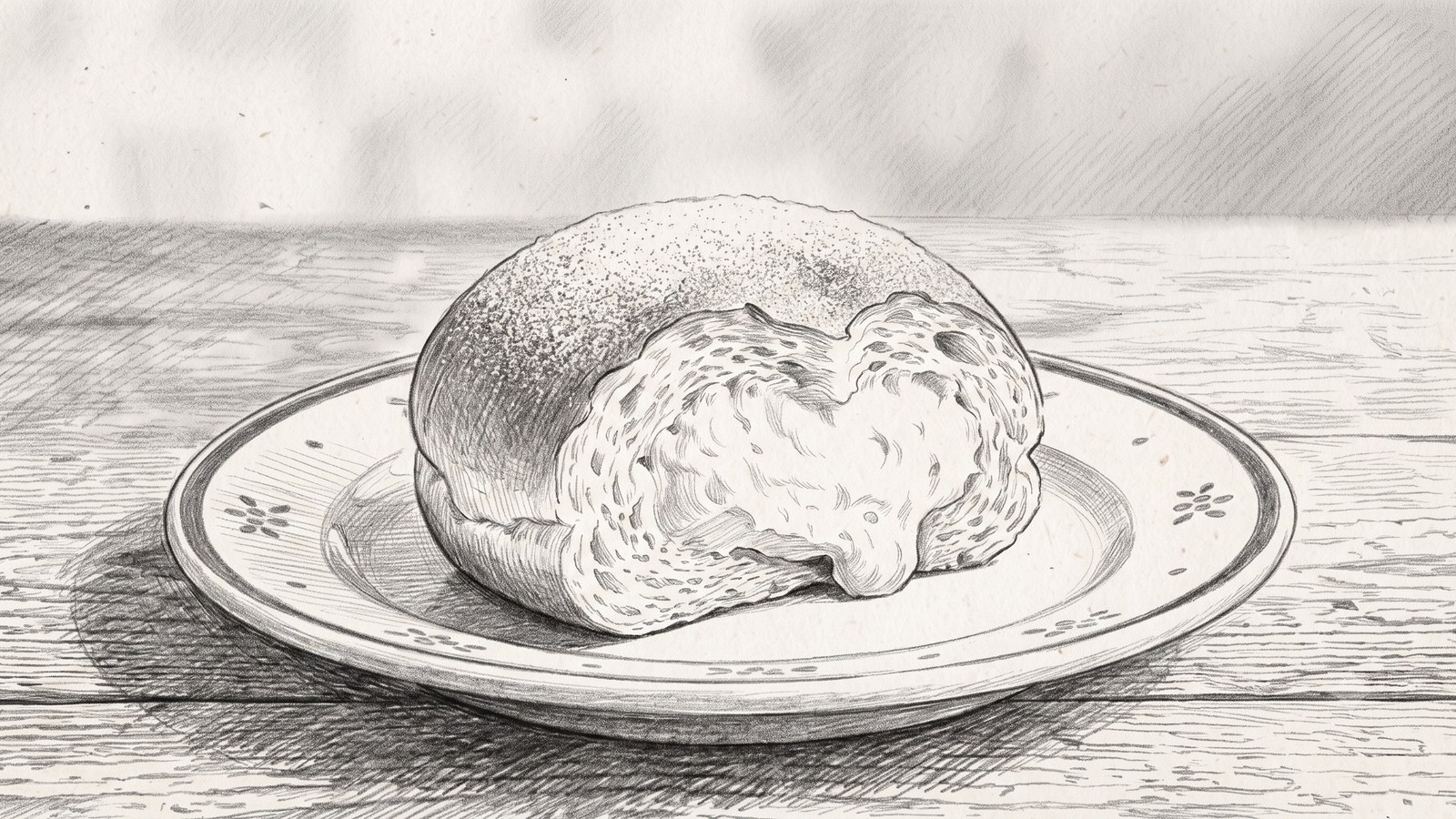
A Milk Cream Bun can look successful before the piping bag touches it: the bun is soft, the cut is clean, and the bench is ready. But the customer buys the filled product. A weak opening can pinch the cream, a deposit can smear on the package, or a hurried handoff can turn a generous bun into a messy one. In a commercial bakery, the filling station is therefore a release point, not a decorative final step.
The American Society of Baking describes bread evaluation as a comparison with a defined bakery standard, using both external and internal characteristics. Apply that idea to the assembled bun. The approved reference must include the bread and cream together, after normal handling—not just the most attractive bun selected from the piping bench.
| Station moment | What can drift | Release check |
|---|---|---|
| Bun preparation | The cut is too shallow to hold the intended deposit or too open to support the bun | Compare opening, crumb support, and exterior condition with the approved reference |
| Cream preparation | Cream appearance or body changes before it reaches the bun | Use only the locally approved cream workflow and inspect the actual prepared cream before filling |
| Deposit | The fill is off-centre, inconsistent, or soils the bun edge | Use a defined deposit and piping route, then compare the presented bun with the reference |
| Pack-out and handoff | The bun compresses, the cream contacts the package, or the first-bite presentation changes | Inspect a representative filled and packaged unit after the real service route |
Write a reference the shift can actually use
Founder intuition is valuable, but it does not scale by itself. Build a reference from a bun that has gone through the exact local route: your dough and bake, cooling method, cut, cream formula, piping tip, deposit, package, and customer handoff. Describe visible conditions in plain language so a trained baker can decide pass, hold, or escalate without guessing what 'generous' means.
ASB notes that samples used for bread evaluation should represent the production run. For a filled bun, keep early, middle, and late samples through a realistic service period. This quickly shows whether the last bun has the same supported shape, clean finish, and customer-facing condition as the first one.
| Reference point | Pass language | Do not substitute |
|---|---|---|
| Bun support | The bun is soft while retaining the approved shape around the cream | An over-open cut that only looks generous before the package closes |
| Cream presentation | The deposit is centred, clean, and visibly consistent with the approved bun | Extra unmeasured cream used to hide a weak bun opening or poor piping route |
| Deposit consistency | The defined deposit and finish repeat across representative units | A visual estimate that shifts with each operator or rush |
| Customer handoff | The filled bun reaches the customer in the approved cold-service and package condition | A bench sample that has not completed the normal handoff route |
Commission the station one variable at a time
When a filled bun collapses, leaks, or looks smaller after packaging, do not repair the symptom with a larger deposit. First establish the current route with one approved formula, package, and service condition. Then change one local variable—bun opening, cream preparation, deposit, tip, package, or handoff pace—and compare representative finished buns against the same reference. Several simultaneous changes make it impossible to learn which control protected the product.
This is the owner-chef decision behind a consistently sellable Milk Cream Bun. The objective is not the tallest cream plume in a social post. It is a product the customer can open cleanly and enjoy as the soft bun-and-cold-cream experience you put on the menu, even when the team is moving quickly.
- Select one finished bun that has passed the full local filling, packaging, and handoff route.
- Record its bun opening, visible support, deposit, cream presentation, package clearance, and service condition in clear pass language.
- Run a normal filling batch and retain representative early, middle, and late units.
- Inspect each unit after the same realistic handoff point—not only immediately after piping.
- Identify the first meaningful departure from the reference and change one controllable station factor.
- Train the shift with the tested reference and an explicit pass, hold, and escalate decision.
Keep product quality separate from food-safety authority
A filling-station quality standard answers whether the bun delivers its intended customer experience. It does not replace a hazard analysis, allergen controls, sanitation procedure, date marking, temperature monitoring, shelf-life study, or local legal requirement. FDA consumer guidance says foods requiring refrigeration should be refrigerated promptly and notes the two-hour rule for food that needs refrigeration at room temperature; your business must follow the applicable local law and its own validated written program.
That distinction is especially important for a bun filled after baking with dairy cream. The visual release described here helps prevent routine waste and customer disappointment. It must operate alongside the bakery's product-specific food-safety plan, not be mistaken for evidence that a cream formula, package, or holding time is safe.
Turn one dependable bun into a sellable system
As a Le Cordon Bleu-trained Korean bakery founder, I think of the filling station as the point where craft becomes a repeatable menu promise. If a bun needs the founder's hand to look right, the system is incomplete. A measured, well-trained release standard gives the team a way to protect softness, cream presence, clean presentation, and sellable yield without chasing a different visual answer on every shift.
The MasterBaker Milk Cream Bun Formula Collection connects the founder-developed tangzhong bun and dairy cream formulas to six applications, scaling, fill controls, cold-chain prompts, QC, costing, packaging, and local commissioning tools. Use the collection to establish the product system, then make the filling station the reliable handoff that lets customers experience it as intended.
Frequently asked questions
Questions operators ask
How do I know if a Milk Cream Bun is ready to release?
Release it only when the bun support, cream presentation, defined deposit, clean finish, package clearance, and actual handoff condition match your locally approved reference. Judge a representative finished unit, not only the piping-bench sample.
Should I add more cream when the bun looks small?
Do not use a larger, unmeasured deposit as the automatic correction. Check the bun opening, support, piping route, deposit control, package, and service route one local factor at a time so the real cause is visible.
Can a visual filling standard set the shelf life for my cream bun?
No. Visual quality control does not establish safety or shelf life. Follow your validated food-safety program and applicable local requirements for the dairy cream, assembled product, storage, and disposition.
Why keep early, middle, and late filling-run samples?
They reveal whether the station changes through the run. A reference based only on the first bun can miss drift in bun condition, cream handling, deposit consistency, or pack-out during a busy service.
Technical references
Sources used for this field note
Related field notes

Why learn from MasterBaker
First-hand bakery work, translated into measurable decisions
MasterBaker.io is led by a Le Cordon Bleu-trained owner-chef who develops, produces, and sells bakery products in Korea. The flagship salt bread grew from a product sold and locally praised in the founder's bakery. These field notes turn that operating experience into temperatures, weights, endpoints, QC, costing, and release decisions rather than anonymous recipe summaries. Read the founder's method and evidence policy.